

What strikes visitors to Cairo, after the relentless noise and motion, is the scale of humanity. Egypt is home to around 120 million people, with roughly 23 million living in the capital alone.
To put that into perspective, Liverpool’s population is just under one million. Only by understanding this contrast can one grasp the magnitude of the reaction that followed Mohamed Salah’s explosive interview on December 6. In that interview, the Liverpool forward claimed he had been “thrown under the bus” by his club, sparking fierce debate in England and igniting what many Egyptians describe as a national uprising.
“This interview was like a revolution in Egypt,” says Diaa El-Sayed, former Egypt assistant coach and a long-time mentor of Salah. “Ninety-nine percent of Egypt supports him.” Across British media, the response was far less forgiving. Former Liverpool defender Jamie Carragher branded the interview a “disgrace,” accusing Salah of publicly undermining the club that made him a global star.
Other pundits insisted the 33-year-old was wrong to air grievances in public, especially amid Liverpool’s demanding season. Yet in Cairo, criticism from England only strengthened public loyalty. “Before Salah, no one here supported Liverpool,” says Cairo resident Noura Essam. “He gave us a global figure. We will always support him, whatever happens.”
Salah’s influence transcends football. During Egypt’s 2018 presidential election, more than one million voters reportedly crossed out official candidates’ names and wrote in Salah instead. He is often described as an unofficial leader, affectionately nicknamed the “Fourth Pyramid” in a nation steeped in ancient monuments and modern challenges.
Around Ramses Square, a chaotic transport hub in central Cairo, café patrons recall Salah’s teenage years. He once endured nine-hour round commutes by bus to attend training sessions. Those same cafés buzzed with disbelief when Salah was benched for three consecutive matches under Arne Slot, then omitted entirely from Liverpool’s Champions League trip to Inter Milan.
“When Liverpool played in Milan, all of Egypt supported Inter,” says Osama Ismail, former Egyptian FA spokesman. “That tells you everything about where loyalties lie.” Ismail, who worked closely with Salah, insists the star remains deeply committed to Liverpool. “He is not arrogant — he is confident,” he says. “And he wants to stay.”
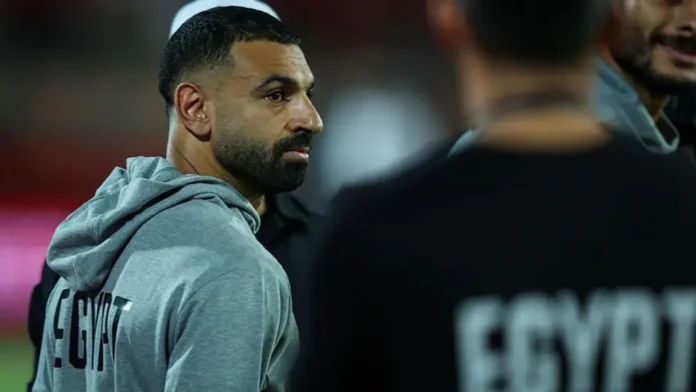
At Cairo International Stadium, where Egypt recently defeated Nigeria 2-1 in a friendly, the mood was one of protection and encouragement as the Pharaohs prepare for the Africa Cup of Nations. “We call him our son,” explains journalist Ahmed Gamal Ali. “Seeing him hurt felt like an insult to the family. The national response was emotional and automatic.”
Ali avoids judging Salah’s decision to speak publicly. “We didn’t live his emotions,” he says. “Players like Salah or Cristiano Ronaldo operate on a different mental level.” Inside the Egypt team hotel, concern over the controversy is minimal. Staff describe Salah as meticulous, disciplined, and deeply professional.
“Working with Mo is the best part of my job,” one staff member says, laughing that most of the squad captained him in their Fantasy Premier League teams. Egypt head coach Hossam Hassan, the country’s all-time top scorer, recently held lengthy talks with Salah, fully aware that Egypt’s Afcon hopes depend on their captain’s sharpness.
Back at Anfield, questions remain. Was Salah’s appearance last weekend a final goodbye, or merely a pause in a long relationship? El-Sayed is unequivocal. “Take this from me,” he says. “It’s not goodbye forever — it’s goodbye for now.”
This article was created using automation technology and was thoroughly edited and fact-checked by one of our editorial staff members