

Iran has vowed to prevent its World Cup 2026 group-stage match against Egypt from being designated as a “Pride Match,” escalating tensions between Middle Eastern football authorities and local organisers in Seattle.
The match, scheduled for 26 June in Seattle, is part of the same World Cup group that includes Belgium. It is set to coincide with the opening of the city’s annual Pride Weekend celebrations.
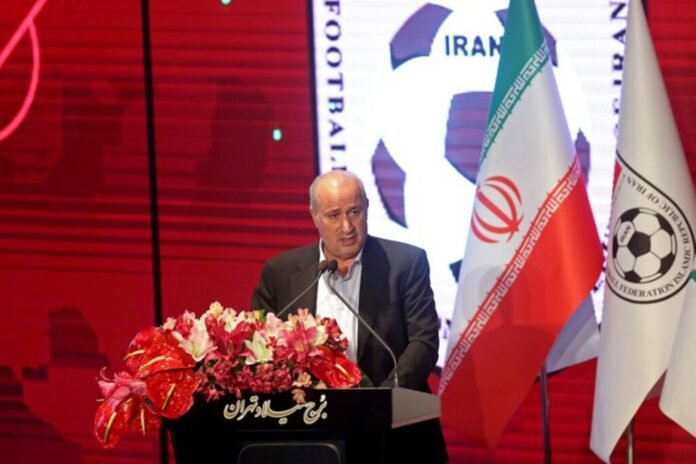
Mehdi Taj, president of the Iranian Football Federation, said Tehran would not accept the branding of the match with LGBTQ+ symbolism. Speaking to the Iranian newspaper Hammihan, Taj said Iran was “determined to stop it and we will succeed.”
“We have absolutely no interest in playing our third World Cup match under the rainbow colours,” Taj said, making Iran’s position unequivocally clear. His comments reflect Iran’s longstanding opposition to LGBTQ+ visibility in international sporting events.
Seattle’s local World Cup organising committee announced around ten days ago that Pride-themed activities linked to the match would go ahead. The committee said the celebrations were planned regardless of objections from participating nations.
In Iran, homosexuality is considered a violation of Islamic law and is criminalised, with severe punishments that can include the death penalty. As a result, Pride-related events are viewed by Iranian authorities as fundamentally incompatible with the country’s religious values.
Egypt has also voiced strong opposition to the match being branded as a “Pride Match.” In a formal letter to FIFA, Egyptian officials said such activities “directly contradict the cultural, religious, and social values of the region.”
The letter added that the issue was particularly sensitive in Arab and Islamic societies, where public expressions of LGBTQ+ identity remain widely rejected. Egypt’s stance aligns closely with Iran’s, despite political differences between the two nations.
Plans to designate the fixture as a “Pride Match” were reportedly made before the World Cup draw on 5 December in Washington. At that stage, organisers did not yet know which teams would be involved.
The match is expected to mark the beginning of Seattle’s Pride Weekend, one of the largest LGBTQ+ celebrations in the United States. Local officials have framed the initiative as a celebration of inclusivity aligned with the city’s values.
However, FIFA’s role in the controversy remains limited. While the world governing body oversees stadium operations, match regulations, and official fan zones during the World Cup, it does not control independently organised city events.
This distinction has complicated efforts by Iran and Egypt to block the Pride branding entirely. Even if FIFA were sympathetic to their concerns, it lacks the authority to cancel or rebrand city-led festivities.
The issue highlights a broader challenge facing FIFA as it prepares for the expanded 2026 World Cup, which will be hosted across the United States, Canada, and Mexico. The tournament is expected to bring together nations with vastly different cultural and legal approaches to social issues.
Previous World Cups have seen similar tensions. At the 2022 tournament in Qatar, several European teams were prevented from wearing “One Love” armbands supporting LGBTQ+ inclusion, citing local laws and FIFA regulations.
Belgium, which shares the same group as Iran and Egypt, has not publicly commented on the Seattle situation. Belgian football authorities have previously supported diversity initiatives, but have also navigated carefully around host nation sensitivities.
Human rights groups argue that Pride-themed events during the World Cup send an important message about inclusion and equality. They say global tournaments should not shy away from such values, particularly when hosted in countries with strong protections for LGBTQ+ rights.
Conversely, officials from Iran and Egypt insist that participation in the World Cup should not require them to endorse messages they view as conflicting with their beliefs. They argue that sport should remain separate from social and political activism.
As the countdown to World Cup 2026 continues, the dispute underscores the growing friction between global sports marketing, local host city values, and the cultural norms of participating nations.
With months still remaining before the tournament begins, it remains unclear whether any compromise can be reached. For now, Seattle’s organisers appear intent on proceeding, while Iran and Egypt signal they will continue pushing back.
This article was created using automation technology and was thoroughly edited and fact-checked by one of our editorial staff members