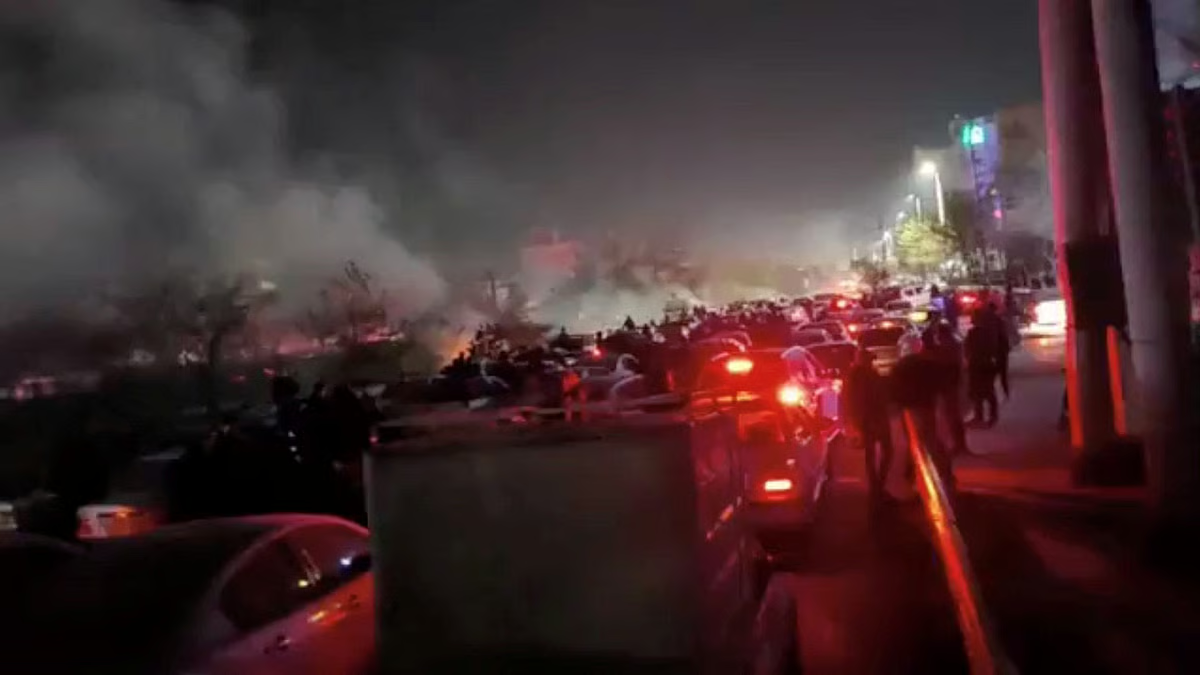


More than 500 people have been killed in just two weeks of protests across Iran, according to a US-based rights group, as authorities intensify a sweeping crackdown on the country’s largest demonstrations in years.
The unrest, initially sparked by soaring prices and economic hardship, has evolved into a direct challenge to Iran’s clerical leadership, drawing sharp warnings from Tehran toward the United States.
Human Rights Activists News Agency (HRANA) said it had verified the deaths of 490 protesters and 48 members of the security forces, citing activists both inside and outside Iran.
The group added that more than 10,600 people have been arrested since the protests erupted on December 28. Iranian authorities have not released official casualty figures, and the tolls could not be independently verified.
Earlier estimates from rights groups had placed the death toll at around 192, but activists now warn that the scale of violence suggests a “massacre” is underway as the government moves to crush dissent.
The protests represent the most serious challenge to the Islamic Republic since nationwide unrest in 2022.
The crisis has taken on an international dimension after US President Donald Trump repeatedly warned Tehran against using force on protesters.
Trump said Washington was prepared to help Iranians seeking “freedom,” and US officials were expected to brief him on options ranging from expanded sanctions to cyber operations and potential military action, according to media reports.
Iranian leaders responded with stark threats. Parliament Speaker Mohammad Baqer Qalibaf warned that any attack on Iran would make US military bases and ships, as well as Israel, “legitimate targets.” Iranian officials have accused the US and Israel of fueling the unrest, a claim both countries deny.
The flow of information from Iran has been severely restricted by an internet blackout imposed since Thursday. Despite this, videos verified by Reuters showed large crowds marching through Tehran at night, chanting and clapping.
Footage from Mashhad depicted burning streets, debris, and explosions amid clashes between protesters and security forces.
State television broadcast images of body bags at Tehran’s coroner’s office, claiming the dead were victims of violence by “armed terrorists.”
Iranian President Masoud Pezeshkian echoed that narrative, accusing foreign-backed groups of attacking mosques, banks, and public property, while urging families to keep young people off the streets.
Israel, which fought a brief war with Iran last year, said it was monitoring developments closely. Israeli officials confirmed heightened military alertness in case of any US intervention, though they stressed the protests were an internal Iranian matter.
Analysts say while the demonstrations may not immediately topple Iran’s leadership, they could significantly weaken it. “The system will likely survive, but emerge far more fragile,” said Alan Eyre, a former US diplomat.
As funerals for fallen security personnel are broadcast on state TV and protests continue despite the crackdown, Iran appears locked in a volatile standoff—internally with its own citizens and externally with its long-time adversaries.