

Newly released documents from the U.S. Department of Justice (DOJ) have shed fresh light on disgraced financier and convicted sex offender Jeffrey Epstein’s efforts to establish connections with influential political and business figures across the Middle East.
The revelations have triggered corporate and diplomatic repercussions, including a significant leadership shift at Dubai-based global ports operator DP World.
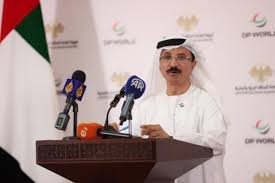
The immediate fallout from the disclosures was the resignation of Sultan Ahmed Bin Sulayem, who served as both chief executive and chairman of DP World.
According to sources familiar with the matter, his departure followed increased scrutiny after his name appeared in the DOJ’s document release. DP World confirmed the leadership change but declined to provide further details. Bin Sulayem has not responded to requests for comment.
Dubai’s ruler subsequently issued a decree appointing a new chairman for Dubai’s Ports, Customs and Free Zone Corporation, one of several prominent positions previously held by Bin Sulayem.
The leadership reshuffle comes amid concerns from global financial stakeholders about the potential reputational risks linked to the revelations.
Among the documents reviewed by investigators were personal email exchanges between Epstein and Bin Sulayem. In one 2007 email, Bin Sulayem reportedly mentioned meeting a woman in New York whose introduction was facilitated by Epstein.
Additionally, an undated photograph included in the files shows the two men in a relaxed setting, appearing to cook together. Officials emphasized that being named in the files does not constitute evidence of criminal wrongdoing.
However, the disclosures prompted international financial institutions to reassess their involvement with DP World. The UK development finance agency British International Investment and Canadian pension fund La Caisse temporarily paused new investments in the company pending clarification.
Both organizations later signaled readiness to continue cooperation following the leadership transition.
The DOJ documents also indicate that Epstein sought to engage with political figures during the 2017–2021 blockade of Qatar by Saudi Arabia, the United Arab Emirates, Bahrain, and Egypt.
In communications with Sheikh Jabor Yousuf Jassim Al Thani, a Qatari businessman and royal family member, Epstein reportedly offered strategic advice during the diplomatic crisis.
He allegedly criticized Qatar’s leadership and recommended steps to improve relations with Washington, including suggesting closer ties with Israel to maintain favorable relations with then-U.S. leadership.
Despite these suggestions, Qatar maintained its existing policy approach, and regional diplomatic relations were eventually restored in 2021. Qatar’s current prime minister and foreign minister has not publicly commented on Epstein’s characterizations outlined in the documents.
The files further reveal Epstein’s interest in Saudi Arabia’s economic policies, particularly discussions surrounding the potential public listing of Saudi Aramco. In email exchanges dating to 2016 and 2017, Epstein warned that a public offering could expose Saudi Arabia to legal vulnerabilities and asset seizure risks.
He also suggested alternative strategies, including selling a substantial stake to Chinese investors rather than pursuing a traditional stock market listing. Saudi Aramco declined to comment on the matter.
Epstein’s network reportedly extended to Egypt as well. Documents indicate that following the 2011 removal of former President Hosni Mubarak, a request for assistance linked to a family member associated with Gamal Mubarak was passed to Epstein.
The exact nature of the assistance request remains unclear, and investigators could not confirm whether Epstein took any action.
The newly released cache of emails, messages, and documents reinforces longstanding allegations that Epstein sought to leverage his wealth and global influence to build relationships with powerful figures worldwide.
While investigators have not determined the extent of his success in influencing decision-making in the Middle East, the disclosures have intensified scrutiny over his international connections years after his death in 2019 while in federal custody in the United States.