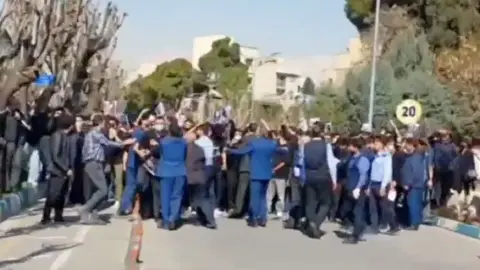


Students at several universities across Iran have staged renewed anti-government protests, marking the largest campus demonstrations since authorities carried out a deadly crackdown earlier this year. The unrest reflects growing frustration among young people amid political repression and mounting international pressure.
Footage verified by BBC showed crowds of students marching through the grounds of Sharif University of Technology on Saturday, chanting slogans and carrying placards demanding accountability for those killed during previous demonstrations.
The videos captured tense scenes as groups of pro-government supporters confronted the students. Scuffles broke out near campus gates, with some pushing and shouting matches before security forces intervened to disperse the crowds.
Similar protests were reported at other universities in Tehran as well as in several provincial cities. Students gathered in courtyards and lecture halls to honour thousands of people they say were killed or detained during January’s suppression of dissent.
Witnesses described the gatherings as both commemorative and defiant. Many students held moments of silence before chanting against state authorities, accusing them of corruption, economic mismanagement, and political repression.
University campuses have long served as centres of activism in the country, but the scale and coordination of the latest rallies surprised observers. Despite heightened surveillance and warnings from administrators, students organised through encrypted messaging platforms and informal networks.
Authorities did not immediately release official figures on arrests or injuries. However, local reports suggested several students were detained during confrontations, while others were questioned by campus security.
The unrest unfolds at a sensitive moment for the government, as regional tensions escalate and diplomatic efforts to resolve disputes over Tehran’s nuclear programme remain uncertain.
The United States has increased its military presence near the region, a move officials say is meant to deter escalation. Meanwhile, President Donald Trump has publicly stated he is considering a limited military strike if negotiations fail.
Washington and several European governments suspect Tehran is moving closer to developing nuclear weapons capability, an accusation Iranian leaders consistently deny, insisting their programme is for peaceful civilian energy purposes.
Last week, American and Iranian officials met in Switzerland for talks aimed at curbing the nuclear programme. Both sides described the discussions as constructive, raising cautious hopes for progress.
Despite that optimism, Trump later warned that the world would soon know whether diplomacy would succeed. He suggested that within days, a decision could be made between a negotiated settlement or military action.
Analysts say such statements have added to anxiety inside Iran, where economic sanctions and political restrictions have already strained daily life. Students in particular have voiced concern that external pressure could worsen domestic repression.
“For young people, it feels like we’re trapped between internal control and foreign threats,” said one protester who asked not to be named for safety reasons. “We want change, not war.”
Human rights groups argue that universities remain one of the few spaces where dissent can still surface, even as authorities tighten controls on media and public gatherings.
Some professors have quietly expressed solidarity with students, while others urged caution, fearing renewed violence. Memories of earlier crackdowns remain fresh, with families still seeking information about missing relatives.
Political observers note that student movements have historically played pivotal roles during periods of upheaval in the country. Whether the current protests can sustain momentum, however, may depend on the government’s response and the outcome of international negotiations.
For now, campuses remain tense. Security patrols have increased, yet students continue to gather in small groups, determined to keep their message alive.
As diplomacy and confrontation unfold simultaneously on the global stage, the voices rising from university courtyards underscore a simple demand: accountability at home and stability abroad.