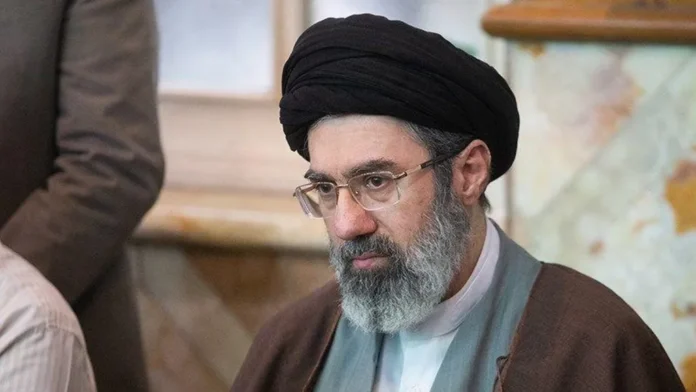


Mojtaba Khamenei, the son of Iran’s late supreme leader Ali Khamenei, has been selected to lead the Islamic Republic following his father’s death in US-Israeli strikes, marking a dramatic transition in the country’s political leadership.
The decision was made by Iran’s Assembly of Experts, the clerical body responsible for appointing the country’s supreme leader. Mojtaba Khamenei’s selection places him at the apex of Iran’s political and religious system at a time of deep regional tensions and domestic uncertainty.
Unlike his father, the 56-year-old cleric has largely remained out of the public eye. He has never held an official government post and has rarely appeared in public speeches or interviews. Only a small number of photographs and videos of him have circulated over the years.
Despite maintaining a low profile, Mojtaba Khamenei has long been rumored to wield significant influence within Iran’s political establishment. US diplomatic cables released by WikiLeaks in the late 2000s described him as a powerful figure operating behind the scenes.
According to reports cited by the Associated Press, some officials viewed him as “the power behind the robes” within the ruling system.
His selection, however, is expected to generate debate inside and outside Iran. The Islamic Republic was founded after the 1979 revolution that overthrew the monarchy, and its governing ideology holds that the supreme leader should be chosen based on religious authority and leadership credentials rather than family lineage.
Mojtaba Khamenei was born on September 8, 1969, in Mashhad, a major religious city in northeastern Iran. He is the second of six children of Ali Khamenei. He attended Tehran’s Alavi School for his secondary education before beginning religious studies later in life.
At the age of 17, Mojtaba reportedly served in short stints during the Iran-Iraq War, the devastating conflict that lasted from 1980 to 1988. The war shaped the outlook of many Iranian leaders and reinforced deep suspicion toward Western governments.
In 1999, Mojtaba moved to the holy city of Qom to pursue advanced theological education. Notably, he did not adopt clerical dress until that period, which is considered unusual as most clerics begin seminary studies earlier in life.
Today he is regarded as a mid-ranking cleric, though some Iranian media and officials had recently begun referring to him as “Ayatollah,” a senior religious title.
His name first gained widespread public attention during Iran’s 2005 presidential election, when reformist politician Mehdi Karroubi accused him of interfering in the vote in support of hardline candidate Mahmoud Ahmadinejad.
Similar accusations resurfaced during the disputed 2009 election, which triggered mass demonstrations known as the Green Movement.
Critics also linked Mojtaba to the crackdown that followed those protests, though he has never publicly addressed the allegations.
Now elevated to Iran’s most powerful position, Mojtaba Khamenei faces the challenge of guiding the country through economic strain, political divisions, and heightened international pressure.
Observers say his leadership will likely continue the hardline policies associated with his father. Yet questions remain over whether he can consolidate authority and persuade the Iranian public that he is the right figure to lead the Islamic Republic through a turbulent period in its history.