

BAHRAIN, MANAMA: Investigation into deadly March 9 blast intensifies as new analysis challenges initial claims of Iranian drone strike involvement
A deadly explosion that tore through a residential neighbourhood in Bahrain is now at the centre of growing controversy, as emerging evidence challenges the initial narrative put forward by authorities.
The March 9 blast injured at least 32 people, including several children, after a powerful explosion struck homes in the capital, Manama. In the immediate aftermath, officials in Bahrain and United States Central Command attributed the incident to an Iranian drone strike.
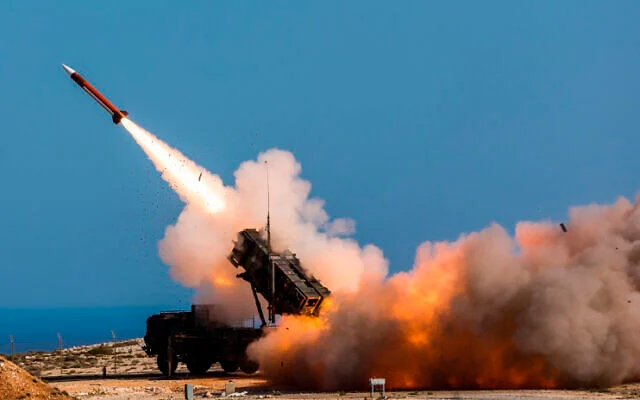
However, new findings based on open-source intelligence have raised the possibility that a US-operated Patriot interceptor missile may have been responsible.
A Narrative Under Pressure
Within hours of the explosion, authorities moved quickly to assign blame. Statements from Bahraini officials and US Central Command pointed to what they described as a hostile drone launched by Iran.
The US military command firmly rejected any suggestion of a missile malfunction, calling such claims a “lie” at the time.
But in the days that followed, Bahrain acknowledged that a Patriot interceptor missile had been deployed during the incident. Officials insisted that the system successfully intercepted an incoming drone mid-air and prevented greater loss of life.
Despite that admission, no concrete evidence of a drone has been publicly presented.
Open-Source Evidence Emerges
Independent researchers have since conducted a detailed analysis of video footage, satellite imagery, and damage patterns from the scene. Their findings suggest that the explosion may have been caused by a Patriot missile detonation over the residential area.
The analysis concluded with “moderate to high confidence” that the interceptor was launched from a US-operated Patriot battery located just a few kilometres from the site.
Experts reviewing the findings have said there is no clear reason to dispute the conclusion, although they emphasised that the evidence is not definitive.
Footage circulating online shows a projectile moving across the night sky at relatively low altitude before a sudden flash lights up the area. Seconds later, the blast sends debris flying and damages nearby homes.
Researchers noted that the pattern of destruction is consistent with a mid-air detonation of a Patriot interceptor.
Two Competing Scenarios
Investigators are now weighing two main possibilities.
The first scenario supports the official account: that the Patriot missile successfully intercepted a drone, and the resulting explosion—while damaging—prevented a potentially more devastating strike.
The second scenario raises more troubling questions. It suggests that the missile may have malfunctioned or detonated without intercepting any target, leading to unintended damage on the ground.
The absence of publicly available drone debris has added weight to this alternative theory.
Military analysts say that while Patriot systems are designed for precision, interceptor failures or unintended detonations, though rare, are not impossible.
Questions Over Transparency
The shifting narrative has prompted calls for greater transparency from both Bahraini authorities and the United States.
Critics argue that the rapid attribution of blame to Iran, followed by a partial revision of events, risks undermining public trust.
“There is a clear need for independent verification,” said one regional security expert. “Without physical evidence of a drone, the initial claims remain open to question.”
The incident also highlights the challenges of operating advanced air defence systems in densely populated areas.
Regional Implications
The controversy comes at a time of heightened tensions across the Gulf region, where missile and drone threats have become increasingly common.
Bahrain hosts key US military assets, including air defence systems designed to counter regional threats. The presence of these systems has long been seen as a deterrent against attacks.
However, incidents like the March 9 explosion raise difficult questions about the risks associated with their use in urban environments.
If the Patriot system was indeed responsible for the blast, even indirectly, it could have broader implications for how such systems are deployed and managed.
Calls for Investigation
Human rights groups and independent analysts are now calling for a thorough and transparent investigation into the incident.
They argue that determining the exact cause of the explosion is essential not only for accountability but also for preventing similar incidents in the future.
So far, neither Bahrain nor US Central Command has released detailed technical data or a comprehensive incident report.
The lack of clarity has allowed competing narratives to take hold, further complicating an already sensitive situation.
Residents Demand Answers
For residents of the affected neighbourhood, the debate over drones and missiles is secondary to the immediate impact on their lives.
Homes were damaged, families displaced, and many are still recovering from injuries sustained in the blast.
“We just want to know what really happened,” said one local resident. “If it was a missile, we deserve to know why it fell on us.”
A Story Still Unfolding
As new evidence continues to emerge, the true cause of the March 9 explosion remains uncertain.
What is clear, however, is that the incident has exposed gaps in the initial narrative and raised serious questions about accountability, transparency, and the risks of modern warfare technologies.
With pressure mounting, both Bahrain and the United States may soon be forced to provide clearer answers about what happened that night.
This article was created using automation technology and was thoroughly edited and fact-checked by one of our editorial staff members