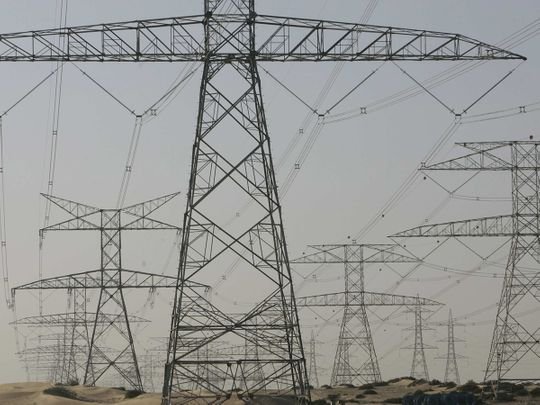


Dubai’s power demand increased by 10 percent in 2021 as the emirate economy hired a recovery from the coronavirus induced slowdown on the back of a stimulation package and other government efforts.
Total demand jumped by 50,202 gigawatt-hours in 2021, approximated with 45,712 gigawatt-hours two years back, as per the Dubai Electricity and Water Authorityon January 24 (Monday).
“High energy demand in Dubai deliberates the economic recovery and the essential return activities,” said Saeed Al Tayer, managing director and chief executive of Dewa.
Moreover, Dubai, the commercial and tourism sector of the Middle East, recently recovered from the coronavirus-induced slowdown after efforts to control the spread of the virus and enhance the business environment was launched.
The government of Dubai launched motivational packages worth rupees Dh7.1 billion in support of the economy and softened the blow of the pandemic of people and people in business.
“Dubai has recently benefitted from the Fourth Industrial Revolution technologies and executed strong precautionary measures to ensure the business continuity,” said Mr Al Tayer.
“This aim has contributed to Dubai introducing a global role model in willingness to deal with different challenges and turn them into promising opportunities.”
In 2021, Dewa himself opened 16 substations valued at Dh2.9 billion to cope with the high electricity demand. Which includes 14 new 132KV stations with a transformation capacity of 2100 megavolt amperes and two 400kV stations with a conversion capacity of 4000 megavolt ampers at Mohammed bin Rashid Al Maktoum Solar Park and in Al Quoz 2, said utility on Sunday.
Dubai also intends to derive about three-quarters of its energy needs from clean sources by 2050.
The utility is creating the Mohammed bin Rashid Al Maktoum Solar Park, which will have a power of 5000 megawatts at the end of 2030.
Moreover, the emirate government also increased the rate of sustainable transport in the end year of 2030 with the use of green mobility startups.
Two years back, Dewa faced the losses of its electricity transmission and distribution networks to 3.3 percent, compared to between 6 percent and 7 percent in Europe and the US.
They said that water network losses fell by 5.2 per cent compared to about 15 percent in North America.
Dewa also tried to come in the Dubai Financial Market list and become one of the ten state-backed companies to have flowed as part of their plans to boost activity on the local bourse.