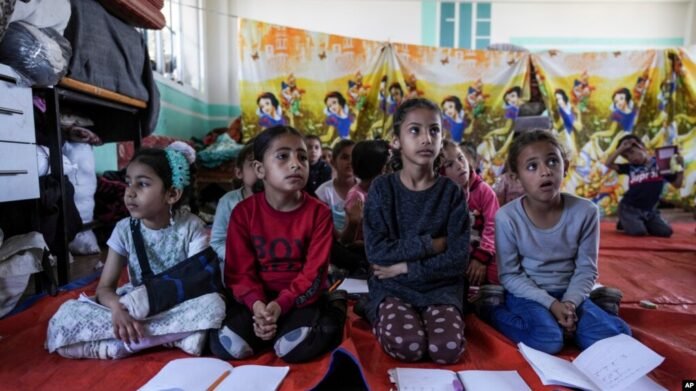


Students in Gaza are facing an unprecedented education crisis after the destruction of all major universities during the ongoing conflict with Israel.
For thousands of young Palestinians, the dream of higher education has been reduced to a distant hope, complicated by displacement, insecurity, and strict movement restrictions.
Before the escalation, Gaza was home to several universities that served as vital centers of learning and opportunity.
Today, those institutions lie in ruins, leaving students without classrooms, faculty, or academic infrastructure. The collapse of the higher education system has disrupted not only current studies but also the long-term aspirations of an entire generation.
With local options eliminated, many students have turned to international universities. Scholarship programs offered by institutions in Europe, North America, and parts of the Middle East have become a crucial lifeline.
These programs provide a rare chance for Gaza’s youth to continue their education and rebuild their futures.
However, securing admission or funding is only the first hurdle. The biggest challenge remains leaving Gaza.
Students report facing prolonged bureaucratic delays, complicated permit requirements, and uncertainty when seeking permission to travel through Israeli-controlled crossings. In many cases, even those with confirmed scholarships are unable to depart in time for academic terms.
“I received acceptance from a university abroad, but I missed the semester because I couldn’t get permission to leave,” said one student, describing a situation shared by many others. These delays often result in lost opportunities, forcing students to defer or abandon their plans altogether.
The situation is further complicated by the broader humanitarian crisis. Frequent displacement, limited access to electricity and internet, and psychological stress have made it increasingly difficult for students to engage in remote learning.
While some organizations have attempted to provide online education alternatives, inconsistent connectivity and lack of resources hinder their effectiveness.
Education advocates warn that the long-term consequences could be severe. Without access to higher education, Gaza risks losing a generation of professionals, including doctors, engineers, and teachers, who are essential for future recovery and development.
International organizations and academic institutions have called for urgent measures to address the crisis.
These include expanding remote learning programs, increasing scholarship opportunities, and easing travel restrictions for students. Some universities have also introduced flexible enrollment policies to accommodate those affected by delays.
Despite these efforts, the path forward remains uncertain. For many students in Gaza, the pursuit of education has become a test of resilience against overwhelming odds.
Their determination highlights both the importance of education and the urgent need for solutions that ensure access, mobility, and stability.
As the conflict continues, the fate of Gaza’s students hangs in the balance. Without immediate intervention, the destruction of universities may have consequences that extend far beyond the present, shaping the region’s future for decades to come.