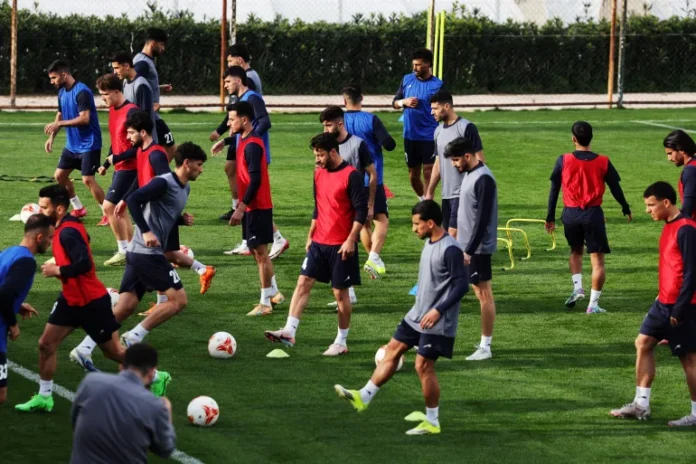


Iran has imposed a sweeping ban on its national and club sports teams travelling to countries it considers “hostile”, according to an announcement by the Ministry of Sports, in a move that threatens to disrupt major international competitions.
The decision comes against the backdrop of escalating regional tensions following a conflict that erupted on February 28 involving Iran, the United States and Israel.
Iranian authorities cited concerns over athlete safety as the primary reason for restricting travel, stating that teams will not be allowed to compete in nations unable to guarantee adequate security.
The directive immediately affects football club Tractor SC, which had been scheduled to play a crucial playoff fixture in the AFC Asian Champions League.
The match against UAE-based Shabab Al Ahli was set to take place in Saudi Arabia next month as part of the tournament’s western zone playoffs.
In its statement, the Ministry of Sports emphasised that “the presence of national and club teams in countries that are considered hostile and are unable to ensure the security of Iranian athletes and team members is prohibited until further notice.”
It added that Iran’s football federation and clubs have been instructed to coordinate with the Asian Football Confederation (AFC) to seek alternative venues for affected matches.
The AFC had earlier confirmed that postponed playoff fixtures would be held on April 13 and 14 in Jeddah, Saudi Arabia, with the city also hosting the tournament’s quarterfinals, semifinals and final later in the month.
Organisers had expressed hope that the regional situation would stabilise in time for the competition to proceed smoothly.
However, Iran’s travel ban has now cast significant doubt over those plans, potentially forcing last-minute logistical changes or venue relocations. The decision could also have broader implications for Iran’s participation in global sporting events.
Notably, the ministry’s statement did not address the upcoming FIFA World Cup, scheduled to be held across the United States, Canada and Mexico in June and July. Iran has already qualified for the tournament, but its participation has become increasingly complicated.
Iranian officials have previously indicated reluctance to send the national team to the United States, citing security concerns following recent military actions.
The country’s ambassador in Mexico has confirmed that discussions have been held with FIFA regarding the possibility of relocating Iran’s group-stage matches to Mexico.
Despite these efforts, FIFA President Gianni Infantino has reiterated that the tournament is expected to proceed as planned, suggesting limited scope for major changes to the hosting arrangements.
Iranian authorities have also clarified that they do not intend to boycott the World Cup, but logistical and political hurdles remain unresolved.
Meanwhile, Iran’s national football team is continuing its preparations abroad. The squad is currently training in Turkiye and is scheduled to play friendly matches against Nigeria and Costa Rica in the coming days.
As tensions persist, Iran’s travel restrictions highlight the growing intersection of geopolitics and sport, with athletes increasingly caught in the crossfire of international disputes.