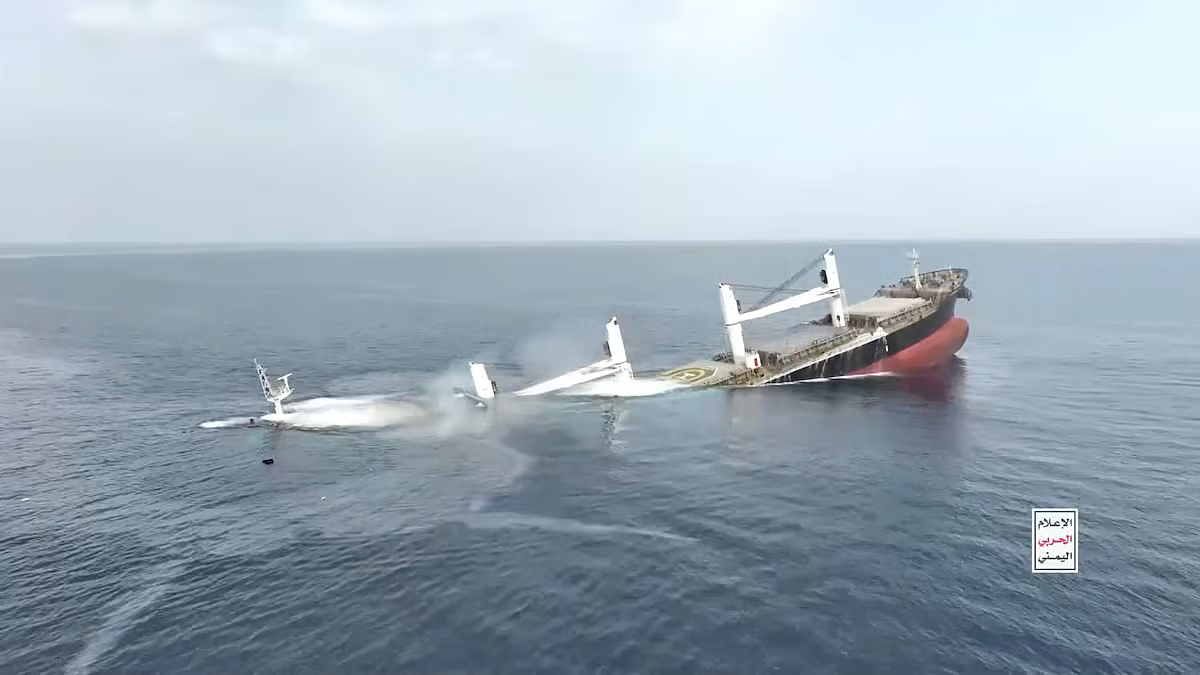


The crew of the Greek-operated cargo ship Eternity C, which sank in the Red Sea after an attack by Yemen’s Houthi movement, have been released and evacuated to safety, officials confirmed on Wednesday. The development brings an end to months of uncertainty for the seafarers and renewed attention to mounting risks facing commercial shipping in the region.
An official from the ship’s operator and a maritime security source told Reuters that all surviving crew members had been freed. The Foreign Ministry of Oman separately confirmed their release and safe return, describing the effort as part of Muscat’s ongoing humanitarian role in regional crises.
According to Omani authorities, the crew comprised nine Filipino nationals, one Indian national and one Russian. They were transported from Yemen’s capital Sana’a to Muscat aboard an aircraft operated by the Omani Royal Air Force, before arrangements were made for their repatriation to their respective home countries.
In a statement, Oman said it valued the cooperation of all parties involved in facilitating the release. The Gulf sultanate has long maintained diplomatic channels with various actors in Yemen and has frequently acted as a quiet mediator in humanitarian cases linked to the prolonged conflict.
The Eternity C, a Liberia-flagged vessel operated by a Greek company, was attacked in July during its transit through the Red Sea. The ship was struck repeatedly with sea drones and rocket-propelled grenades, forcing the crew to abandon vessel amid severe damage.
Rescue teams later pulled several crew members alive from the water. However, the Houthis subsequently acknowledged holding a group of the seafarers, including a security guard, prompting international concern and condemnation from Western governments.
The United States Mission in Yemen accused the Houthis of kidnapping the crew and called for their immediate and unconditional release. Washington has repeatedly warned that the targeting of civilian shipping violates international law and endangers global trade routes.
The attack on the Eternity C came just days after another vessel, the Magic Seas, was struck in a similar incident. All crew members aboard the Magic Seas were rescued before the ship eventually sank, narrowly avoiding further casualties.
These incidents marked a renewed phase in the Houthis’ maritime campaign, which had largely subsided earlier this year. From November 2023 through December 2024, the group carried out attacks on more than 100 commercial vessels, claiming the actions were in solidarity with Palestinians amid the war in Gaza.
The resurgence of assaults has reignited fears within the global shipping industry, which depends heavily on the Red Sea and the Bab al-Mandab Strait for the transport of energy supplies, consumer goods and industrial materials between Asia and Europe.
Shipping companies have already rerouted dozens of vessels around the Cape of Good Hope to avoid the region, significantly increasing transit times and costs. Industry analysts warn that sustained instability could further disrupt supply chains already strained by geopolitical tensions and economic uncertainty.
For the freed crew members and their families, the focus now turns to recovery after months of captivity and trauma. Maritime unions welcomed the release, while reiterating calls for greater international protection of civilian seafarers operating in conflict zones.
Diplomatically, Oman’s role has drawn praise as a rare success story amid Yemen’s complex war landscape. Yet the broader challenge of securing one of the world’s most vital maritime corridors remains unresolved, as regional conflicts continue to spill into international waters.
This article was created using automation technology and was thoroughly edited and fact-checked by one of our editorial staff members