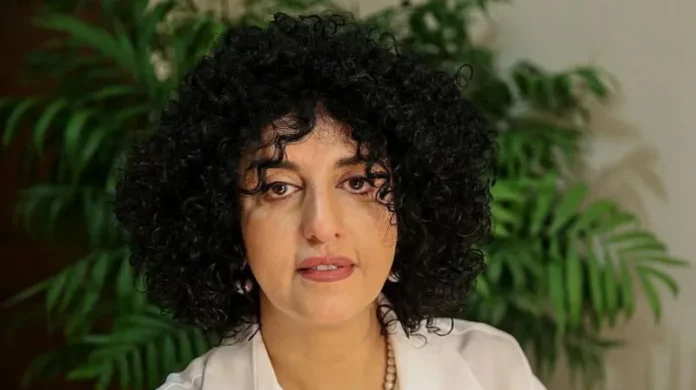


Iranian security forces have “violently arrested” Nobel Peace Prize laureate and prominent women’s rights activist Narges Mohammadi, according to her foundation, triggering swift international condemnation and renewed scrutiny of Iran’s treatment of dissidents.
The Narges Foundation said the 53-year-old activist was detained in the eastern city of Mashhad while attending a memorial ceremony, alongside several other activists. Witnesses described a forceful arrest that raised immediate concerns over her safety and legal status.
The Nobel Committee said it was “deeply concerned by today’s brutal arrest of Narges Mohammadi,” urging Iranian authorities to clarify her whereabouts, ensure her integrity, and release her “without conditions.” Iranian officials have not publicly commented on the incident.
Mohammadi was awarded the 2023 Nobel Peace Prize for her long-running campaign against the oppression of women in Iran and for her broader human rights activism. The prize recognized years of advocacy carried out despite repeated arrests and harsh prison sentences.
Her latest detention comes after a brief medical furlough in December 2024, when she was temporarily released from Tehran’s notorious Evin prison. She had been incarcerated since 2021 and was expected to return to prison to continue serving multiple sentences.
According to rights groups, Mohammadi was arrested while attending a memorial for Khosrow Alikordi, a lawyer who was found dead in his office last week. The circumstances surrounding his death have been described as “suspicious” by independent monitors.
Norway-based organization Iran Human Rights called for an independent inquiry into Alikordi’s death, citing unanswered questions and a broader pattern of intimidation against legal professionals and activists critical of the state.
Several other attendees at the memorial were reportedly detained after chanting slogans including “death to the dictator” and “long live Iran,” reflecting growing public frustration amid an intensified security crackdown in recent months.
Taghi Rahmani, Mohammadi’s husband, told BBC Persian that her arrest was witnessed by the lawyer’s brother and involved violence. He described the detention as an act of retaliation rather than law enforcement.
“This act is against human rights laws and amounts to some kind of revenge,” Rahmani said. “What happened today in Mashhad is extremely concerning, particularly as the establishment’s crackdown has intensified recently.”
Human rights advocates say Mohammadi’s arrest underscores Tehran’s zero-tolerance approach toward dissent, even when it involves internationally recognized figures. They warn that her high profile has not shielded her from repeated persecution.
International organizations and Western governments have previously called for Mohammadi’s release, citing deteriorating health conditions and allegations of mistreatment in custody. Her supporters argue that continued detention poses serious medical risks.
Iran has faced sustained criticism over its handling of protests, women’s rights activism, and political opposition, particularly following nationwide demonstrations in recent years. Arrests at memorials and funerals have increasingly drawn condemnation as collective punishment.
As pressure mounts, activists fear that Mohammadi’s detention signals a broader warning to civil society figures. Calls for accountability are growing, with demands for independent monitoring of her case and protections for those detained alongside her.
This article was created using automation technology and was thoroughly edited and fact-checked by one of our editorial staff members