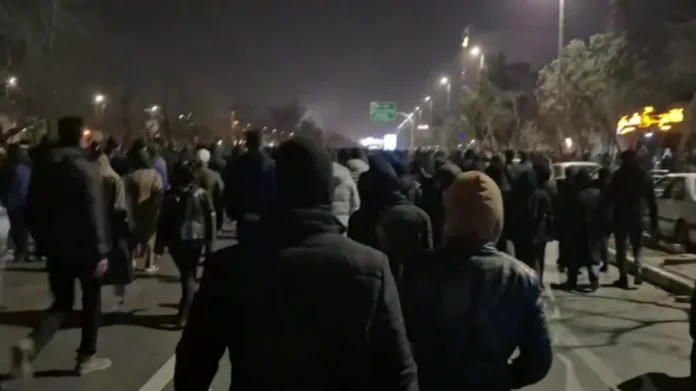


Massive protests erupted across Iran on Thursday, with tens of thousands of people taking to the streets of Tehran, Mashhad, and other major cities, in what appears to be the largest demonstration against the clerical establishment in years.
The unrest, fueled by anger over the collapse of the Iranian currency, has spread to over 100 cities and towns across all 31 provinces, human rights groups report.
Persian showed peaceful marches in Tehran and Mashhad, with demonstrators chanting slogans calling for the overthrow of Supreme Leader Ayatollah Ali Khamenei and the return of Reza Pahlavi, son of the late Shah.
In several cities, protesters were seen climbing on overpasses and removing surveillance cameras. Other videos captured calls of “Death to the dictator” in Isfahan, “Long live the Shah” in Babol, and “Don’t be afraid, we are all together” in Tabriz.
The demonstrations follow a call from Reza Pahlavi, who lives in Washington DC, urging Iranians to “take to the streets and, as a united front, shout your demands.”
In messages on social media, Pahlavi described the protesters as “courageous compatriots” and thanked US and European leaders for holding the regime accountable. He called for further protests Friday evening.
The US-based Human Rights Activist News Agency (HRANA) reported that at least 34 protesters, including five children, have been killed, alongside eight security personnel. Norway-based Iran Human Rights (IHR) confirmed at least 45 deaths, including eight children.
Iranian authorities reported six security deaths. Kurdish and Lor minority regions in western Iran, including Ilam, Kermanshah, and Lorestan provinces, have experienced particularly violent crackdowns, with 17 protesters confirmed killed.
In response to the unrest, the Iranian government has imposed a nationwide internet blackout. NetBlocks, a digital rights watchdog, warned that this restriction hinders the public’s right to communicate at a critical moment.
Meanwhile, Iranian state media downplayed the scale of protests, releasing footage of empty streets in some cities.
The unrest began on 28 December when shopkeepers protested sharply against the falling value of the rial. Over the past year, the currency has reached record lows, inflation has surged to 40%, and sanctions combined with government mismanagement have crippled the economy.
Students and other civilians soon joined the movement, broadening its scale and intensity.
The protests recall previous uprisings in 2022 and 2009, which saw tens of thousands detained and hundreds killed.
Iranian President Masoud Pezeshkian called on security forces to exercise restraint, while Supreme Leader Khamenei instructed authorities to “speak with the protesters” but warned that “rioters should be put in their place.”
On Thursday, US President Donald Trump warned of potential military action if protesters were killed, underscoring the tense international scrutiny of Iran’s response. Analysts describe the current unrest as the largest anti-regime mobilization since the 2022 Mahsa Amini protests, signaling deepening frustration over both economic hardship and political repression.