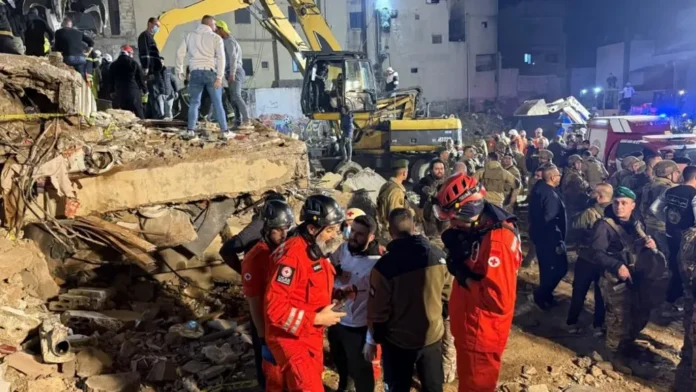


The death toll from the collapse of two adjoining residential buildings in Lebanon’s northern city of Tripoli has risen to 15, according to state media, as rescue teams continue searching through debris for possible survivors or victims.
Civil Defence Director General Imad Khreiss confirmed that eight people were pulled alive from the rubble after the structures crumbled.
The two buildings were home to at least 22 residents, though local municipal authorities warned that additional individuals may still be unaccounted for.
Footage circulating on social media captured the moment the buildings collapsed, showing one side of the structures giving way from the lower floors before both buildings fell almost simultaneously.
Thick clouds of dust and debris quickly engulfed the surrounding street, drawing large crowds of residents and emergency workers to the disaster site.
The tragedy marks the fifth residential building collapse recorded in Tripoli during the winter season, raising alarm over the deteriorating condition of housing infrastructure in Lebanon’s second-largest city.
Tripoli, widely considered one of the country’s poorest urban centres, has long struggled with underfunded maintenance, weak enforcement of construction regulations, and aging residential blocks.
Tripoli Mayor Abdel Hamid Karimeh described the collapse as a result of prolonged neglect and limited municipal capacity. “Thousands of our people in Tripoli are threatened due to years of neglect,” he said, adding that the crisis exceeds the city’s resources.
Karimeh later announced he had submitted his resignation to the interior minister, calling Tripoli a “disaster-stricken” city.
Lebanese President Joseph Aoun said he was closely monitoring the situation and urged rescue teams across the country to mobilise and support emergency operations.
Prime Minister Nawaf Salam described the incident as a “humanitarian catastrophe” and pledged government assistance to affected families.
“The government is fully prepared to provide accommodation for all residents of buildings that need to be evacuated,” Salam stated, emphasising that the collapse reflected “years of accumulated neglect” in Lebanon’s urban housing policies.
The disaster comes shortly after residents were evacuated from another nearby building following visible structural cracks. Two weeks earlier, another building collapse in Tripoli claimed the lives of a father and his daughter, further intensifying fears about the safety of aging housing structures.
Authorities have repeatedly warned about unsafe buildings across the city. Last month, the head of Lebanon’s Higher Relief Authority stated that more than 100 buildings in Tripoli required evacuation warnings due to structural vulnerabilities.
Experts attribute the rising number of collapses to Lebanon’s prolonged economic crisis, which has severely weakened maintenance efforts and reduced government oversight.
Many residential buildings across the country were constructed illegally or without permits, particularly during Lebanon’s 1975-1990 civil war. Others have been expanded vertically with additional floors added without proper engineering approval.
The national syndicate for property owners criticised what it described as the Lebanese state’s failure to ensure housing safety. In a statement, the organisation called the collapse a result of “blatant negligence” and urged authorities to conduct a nationwide structural assessment to identify buildings at risk.
As rescue operations continue, the tragedy has renewed urgent calls for comprehensive reforms to Lebanon’s housing regulations and infrastructure management, amid growing fears that similar disasters could strike again.