

US President Donald Trump has said the world will soon learn whether the United States will secure a new agreement with Iran over its nuclear programme or move toward possible military action.
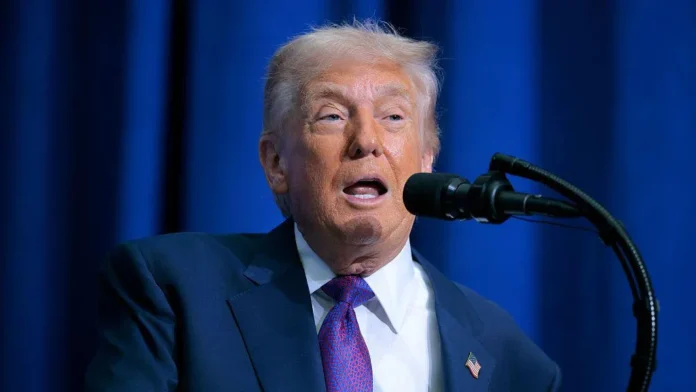
Speaking at the first meeting of his Board of Peace in Washington, Trump indicated that the coming days could be decisive for diplomacy.
“We will find out over the next, probably, 10 days,” Trump said, stressing that negotiations must lead to what he described as a “meaningful deal.” Without one, he warned, “bad things happen,” signalling the potential for escalating conflict between the two countries.
The remarks come as talks between American and Iranian negotiators continue in Switzerland, where officials have reported cautious progress. Diplomats familiar with the discussions say both sides remain engaged, though major differences persist over nuclear restrictions and security guarantees.
At the same time, the United States has increased its military presence in the Middle East, a move widely interpreted as both a precaution and a pressure tactic during negotiations.
Among the deployments is the aircraft carrier USS Abraham Lincoln, which recently moved into the region alongside additional aircraft and missile systems.
Iran has responded with warnings of its own. In a letter to António Guterres, the country’s representatives at the United Nations said any US bases used for attacks would be considered legitimate targets.
The message underscored Tehran’s concerns about the possibility of a military strike while also stating that Iran does not seek war.
Tensions have also risen on social media, where Iran’s Supreme Leader Ayatollah Ali Khamenei posted messages criticising the US military buildup and warning that American warships in the region could face retaliation if conflict breaks out.
Within the United States, debate is intensifying over whether the president has the authority to launch military action without approval from Congress. Lawmakers from both parties have raised concerns about the potential consequences of a new conflict in the Middle East.
Representative Ro Khanna, a Democrat from California, and Republican Representative Thomas Massie of Kentucky have said they plan to push for a vote next week that would require congressional approval before any military operation against Iran.
Their effort draws on the 1973 War Powers Act, a law designed to give Congress oversight of decisions that could lead to armed conflict.
Khanna warned that a war with Iran could have serious consequences, pointing to the country’s large population, advanced air defences and the presence of thousands of US troops across the region who could become targets in the event of retaliation.
Meanwhile, diplomatic observers say the creation of Trump’s Board of Peace has raised questions internationally. Initially expected to focus on resolving the conflict between Israel and Hamas and supporting reconstruction in Gaza, the board’s role now appears broader, potentially extending to other global disputes.
The situation remains fluid, with both diplomatic and military developments unfolding simultaneously. Analysts say the next several days may prove critical in determining whether negotiations can produce an agreement or whether tensions between Washington and Tehran escalate further.