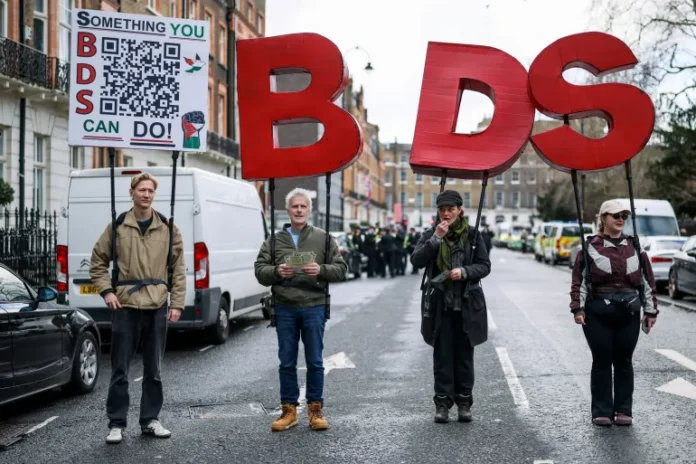


A supermarket employee in a quiet Irish seaside town has become the latest symbol of labour-led activism linked to the Gaza conflict, highlighting growing worker resistance to handling Israeli goods across Europe.
The worker, employed by Tesco, staged a personal protest after witnessing images of destruction and civilian casualties in Gaza.
Initially, he warned customers about Israeli-sourced produce and later refused to scan or sell such items, citing moral objections to the ongoing war. The company suspended him but reinstated him months later, assigning him duties that avoid Israeli products following union-backed negotiations.
The case sparked local demonstrations and reignited debate over whether individual workers can translate ethical concerns into workplace action.
Labour organisations across Ireland, the United Kingdom and Norway have since adopted motions supporting workers who refuse to handle Israeli goods, reflecting mounting grassroots pressure on retailers and policymakers.
The boycott strategy draws historical parallels to Ireland’s 1984 protests at Dunnes Stores, where employees refused to handle South African goods during apartheid.
The campaign lasted nearly three years and contributed to Ireland introducing a trade ban on South Africa, a milestone often cited by modern activists.
Central to the current movement is the Boycott, Divestment and Sanctions movement, which urges economic, cultural and academic boycotts of Israel until it complies with international law.
Activists argue that worker-led action is necessary when governments fail to impose sanctions or trade restrictions.
Retail cooperatives such as Co-op UK and Coop Alleanza 3.0 have already removed selected Israeli products from shelves, signalling growing corporate sensitivity to public pressure.
Meanwhile, governments in Spain and Slovenia have introduced trade restrictions on goods produced in Israeli settlements in the occupied West Bank, marking some of Europe’s strongest legislative responses.
Despite growing activism, the movement faces substantial resistance. The US-based organisation B’nai B’rith International has warned that European boycott legislation could conflict with American anti-boycott laws and harm international corporate operations.
The group also criticises broader diplomatic actions perceived as unfavourable toward Israel.
Leaked documents have further suggested coordinated efforts by Israeli authorities to monitor boycott campaigns across Europe, including legal strategies targeting activists and political figures supportive of Palestinian rights.
Opposition has also emerged within European governments. Germany’s parliament, the Bundestag, passed a resolution condemning BDS as anti-Semitic, a move welcomed by the pro-Israel advocacy organisation European Leadership Network.
Critics argue such measures risk conflating political criticism of Israeli policies with anti-Semitism.
In Britain, political divisions remain evident. The Labour Party has faced internal disagreements over legislation aimed at preventing local institutions from implementing independent boycott measures, reflecting broader tensions between diplomatic alliances and domestic activism.
As the Gaza conflict continues, labour-driven boycotts highlight the growing influence of grassroots campaigns in shaping trade debates.
While it remains uncertain whether worker activism will translate into widespread governmental sanctions, the movement signals a renewed intersection between labour rights, ethical commerce and international political conflict.