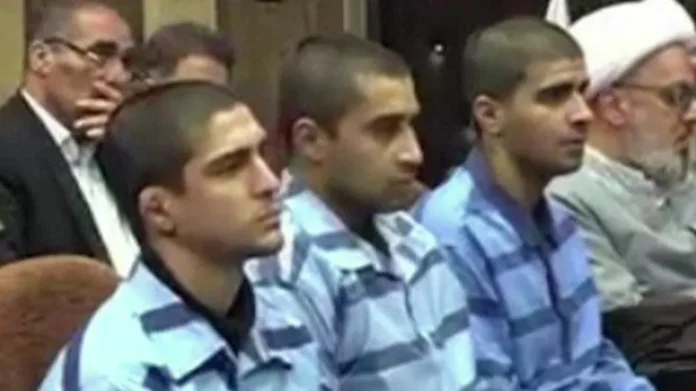


Iran has executed three men accused of killing police officers during anti-government protests earlier this year, marking the first confirmed executions directly linked to the January unrest.
The hangings have intensified international criticism of Tehran’s handling of dissent and its use of capital punishment.
According to state-affiliated Tasnim news agency, the executions were carried out on Thursday morning in Qom province after the Supreme Court upheld the sentences. The men were identified as Saleh Mohammadi, Mehdi Ghasemi, and Saeed Davoudi.
Authorities said they were convicted of killing two police officers in separate incidents during the protests.
Among those executed was Mohammadi, reportedly a teenager and a member of Iran’s national wrestling team, a detail that has drawn particular attention and concern from global observers.
The three men were also convicted of “moharebeh,” or waging war against God, a charge frequently used by Iranian courts in cases involving political unrest. The offense carries the death penalty under Iran’s legal system.
Human rights organizations, however, have strongly condemned the executions. Several groups claim the men were subjected to torture and forced to confess, and that they were denied fair trials.
These allegations have not been independently verified, but they echo longstanding concerns about due process in Iran’s judicial system.
The executions come amid a broader crackdown following nationwide protests that erupted in December and intensified in January. The demonstrations, initially triggered by economic grievances such as currency collapse and rising living costs, quickly evolved into widespread calls for political reform.
According to the Human Rights Activists News Agency (Hrana), thousands of people were killed during the government’s response, including hundreds of minors. The figures remain disputed, as Iran has not released official casualty numbers.
Adding to international tensions, Iran also executed a dual Iranian-Swedish national, Kouroush Keyvani, just a day earlier. He had been convicted of spying for Israel, according to Iran’s judiciary. Swedish officials criticized the execution, stating that the legal process lacked transparency and fairness.
Global reactions have been swift. Western governments and rights groups have called for investigations and urged Iran to halt further executions. Earlier this year, US President Donald Trump warned of “strong action” if Iran proceeded with executing protesters, although no immediate measures have been confirmed following the latest developments.
Iranian officials have defended their actions, maintaining that those executed were responsible for violent crimes and posed threats to national security. Authorities have repeatedly rejected accusations of unfair trials and torture.
The unrest itself represents one of the most serious challenges to Iran’s leadership since the 1979 Islamic Revolution. Despite a near-total internet shutdown during the peak of protests, reports from within the country described an unprecedented level of force used by security forces.
While some detainees have reportedly been released or had sentences reduced, fears persist that more executions could follow. Rights advocates warn that the recent hangings may signal a broader effort to deter further protests through harsh punishment.
As tensions remain high, the situation continues to draw global attention, with calls growing louder for accountability and respect for human rights in Iran.