

Iran is nearing a deal with China to purchase advanced anti-ship cruise missiles, according to six people familiar with the negotiations, in a move that could significantly reshape naval power balances in the Gulf.
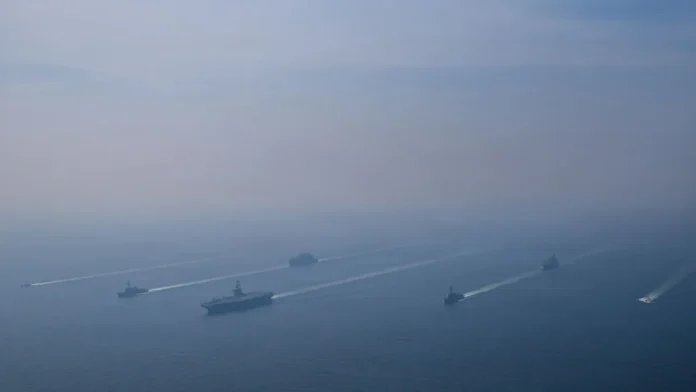
The reported agreement comes as the United States deploys multiple aircraft carrier strike groups near Iran, raising fears of a broader military confrontation if diplomatic efforts over Tehran’s nuclear program collapse.
Sources said talks for the Chinese-made CM-302 missiles are near completion, though delivery dates and quantities remain unclear. The weapons are designed to travel at supersonic speeds while flying low to evade radar systems, making them difficult for naval defenses to intercept.
Defense analysts warn that even a limited deployment could threaten large surface vessels, including aircraft carriers, fundamentally changing calculations for any US naval operation near Iranian shores.
The negotiations, which began at least two years ago, reportedly accelerated after last summer’s brief but intense conflict between Iran and Israel. Senior Iranian officials, including Deputy Defense Minister Massoud Oraei, are said to have visited Beijing during the final stages of the talks.
According to people briefed on the discussions, Tehran sees the deal as a way to replenish an arsenal depleted by months of regional clashes and sanctions-related procurement challenges.
“Iran having supersonic anti-ship capability would be a complete game-changer,” said Danny Citrinowicz, a former Israeli intelligence officer. “These missiles are extremely hard to intercept and would pose a serious threat to ships operating close to its coastline.”
Beijing has not publicly confirmed the transaction. China’s diplomatic mission to the United Nations referred questions to its foreign ministry, which did not respond to requests for comment from Reuters.
Washington also declined to address the alleged sale directly but reiterated that all options remain on the table regarding Iran’s nuclear program.
President Donald Trump recently warned Tehran that failure to reach an agreement could prompt “very tough” action. US defense officials say forces are preparing for the possibility of prolonged operations if ordered.
Among the assets already in the region is the USS Abraham Lincoln carrier strike group, supported by escorts and strike aircraft. The USS Gerald R. Ford is also heading toward the Gulf, bringing the total number of aircraft and personnel to levels rarely seen outside major conflicts.
Together, the two groups can deploy more than 150 aircraft and thousands of sailors and marines, underscoring the scale of the US buildup.
The potential missile transfer would mark one of the most advanced pieces of military hardware China has supplied to Iran in decades. The CM-302 is marketed by China Aerospace Science and Industry Corporation as capable of disabling or sinking large warships.
The system can be mounted on trucks, ships or aircraft, giving Iran flexibility to disperse launch platforms and complicate targeting efforts.
Pieter Wezeman, a researcher at Stockholm International Peace Research Institute, said the acquisition would represent a significant upgrade. “This type of missile improves both deterrence and offensive reach,” he noted. “It allows Iran to threaten naval forces well beyond its immediate coastline.”
The reported deal highlights deepening ties between Beijing and Tehran, which have strengthened through joint naval exercises with Russia and expanded trade partnerships.
Chinese President Xi Jinping has previously expressed support for Iran’s sovereignty and opposed the reimposition of sanctions.
Iranian officials frame the purchases as defensive. One foreign ministry official said Tehran is exercising its right to cooperate with allies on military matters at a time of mounting pressure from Washington.
However, critics argue that the move could inflame tensions and trigger a regional arms race.
Supreme Leader Ali Khamenei recently issued stark warnings, suggesting that even the strongest military forces could be struck hard. He said advanced weapons could send hostile warships “to the bottom of the sea,” while insisting Iran’s nuclear program remains peaceful.
Beyond the anti-ship missiles, sources say Tehran is also exploring purchases of surface-to-air systems and other advanced equipment. Whether Beijing proceeds with large-scale transfers remains uncertain, particularly as tensions rise and diplomatic scrutiny intensifies.
For now, analysts say the convergence of Iranian rearmament and US naval deployments leaves the Gulf in a fragile state. Any miscalculation, they warn, could rapidly escalate into direct confrontation, with far-reaching consequences for regional security and global energy markets.
This article was created using automation technology and was thoroughly edited and fact-checked by one of our editorial staff members