

Any language is a deep-sea of meanings, gestures, and interpretations. Therefore, ideological and civic history is packed with philosophical distinctions that sometimes arise in interpreting a single word.
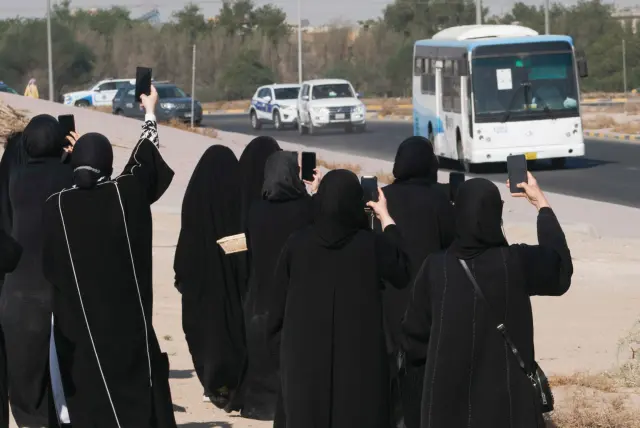
In the first week of March, a repudiated political Islam commentator published one article in which he gave the headline of that article is “Kuwait’s Harem“, which targeted the Kuwait women mainly. Before highlighting the details, it is essential to know about the meaning of ‘Harem’. As per the Arabic dialects, the word “Harem” is used to belittle the social status of women.
Specifically, the term has long been dropped from people’s vocabulary within the Gulf states. Indeed, today there is no harem panel, no harem door, and no harem entrance.
These ideas have become outdated and out of touch with women’s progress to date. Those reading this author’s article cannot help but can feel, whether explicitly or between the lines, the feel of irony and sarcasm he used to describe Kuwaiti women by leading them as the “Harem of Kuwait.”
In terms of content, the article was awash with contradictions and some errors. That’s what the political Islam movement is famous for. According to the point of view of political Islam that the rights which were achieved by women, and that is also mentioned in that article in which they stated that it is achieved because women are holy women; otherwise, it won’t be achieved by them.
Allow me to get back to the language, its sources, and its variations in a bid to find reports about the history of the use of the word “harem” instead of a “woman.”
According to one of the harem, the Arab region did not aware of the word “harem” Until the 14 century, and this word did not circulate among the Arabs but after the foremost centuries in which dictionaries of the Arabic language were made. The spread of the word rose with the sultans of the Ottoman Turks giving a special place for women and concubines known as the haremlik.
After all, when a writer notes about the righteous women of Kuwait using the term “harem,” he isn’t using it to praise or celebrate Kuwaiti women but to provoke and insult them and their remarkable achievements.